
- Home
- A Loop Itinerary in the heart of Otranto
Itinerary
Welcome to Otranto, Italy’s Gateway to the East. Nestled on the easternmost tip of the peninsula, this pale-stone town—washed by turquoise, crystal-clear waters—holds stories of saints, navigators, and ancient empires. Its historic center, protected by mighty fortified walls, is a labyrinth of alleys that feel suspended in time.
To help you capture the most authentic and deep essence of Otranto without any rush, we propose a loop itinerary designed to be enjoyed over the course of an entire morning (about 4–5 hours). A slow, refreshing walking journey that allows you to alternate visits to monuments with contemplative breaks in front of the blue sea. History and beauty await you around every corner.
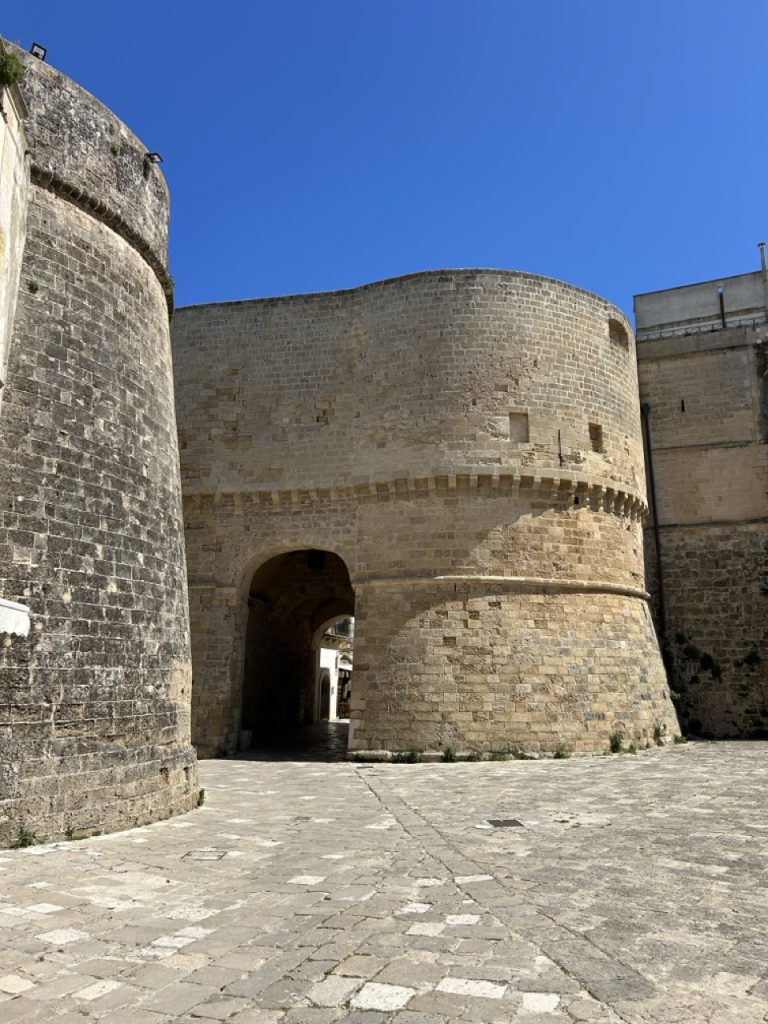
Starting Point: Porta Alfonsina, the Threshold of Time
Our morning begins in front of Porta Alfonsina, the monumental entrance to the old town. Flanked by two imposing circular towers, this grand gateway is far more than a simple passageway: it is a true time machine. Crossing it in the morning, as the first light illuminates the pale stone, means leaving modernity behind and step into a realm of narrow streets smelling of history and sea air.
Stop 1: The Cathedral of Santa Maria Annunziata and the Mosaic of Life
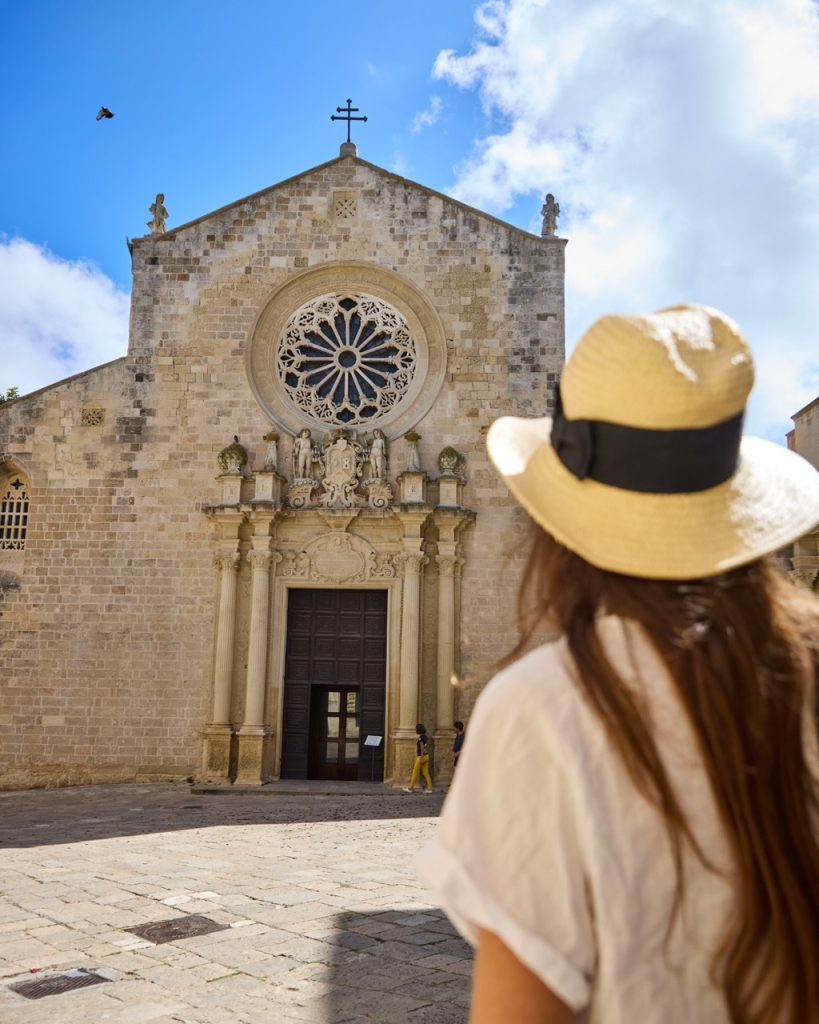
Walking slightly uphill through alleys that are just beginning to wake up, the view opens onto Piazza Basilica, dominated by the majestic Cathedral of Santa Maria Annunziata. The facade—a harmonious synthesis of Romanesque, Baroque, and Gothic elements with a magnificent rose window—leads into one of Europe’s most precious artistic treasures.
Take all the time you need to admire the monumental floor mosaic created between 1163 and 1165 by the monk Pantaleone. This immense “Tree of Life” weaves together biblical stories, classical myths, allegorical figures, and medieval bestiaries into a universal tale. Before heading down to the crypt, pause in front of the solemn Chapel of the Martyrs, home to the relics of the 800 citizens of Otranto who in 1480 chose martyrdom rather than renounce their faith.
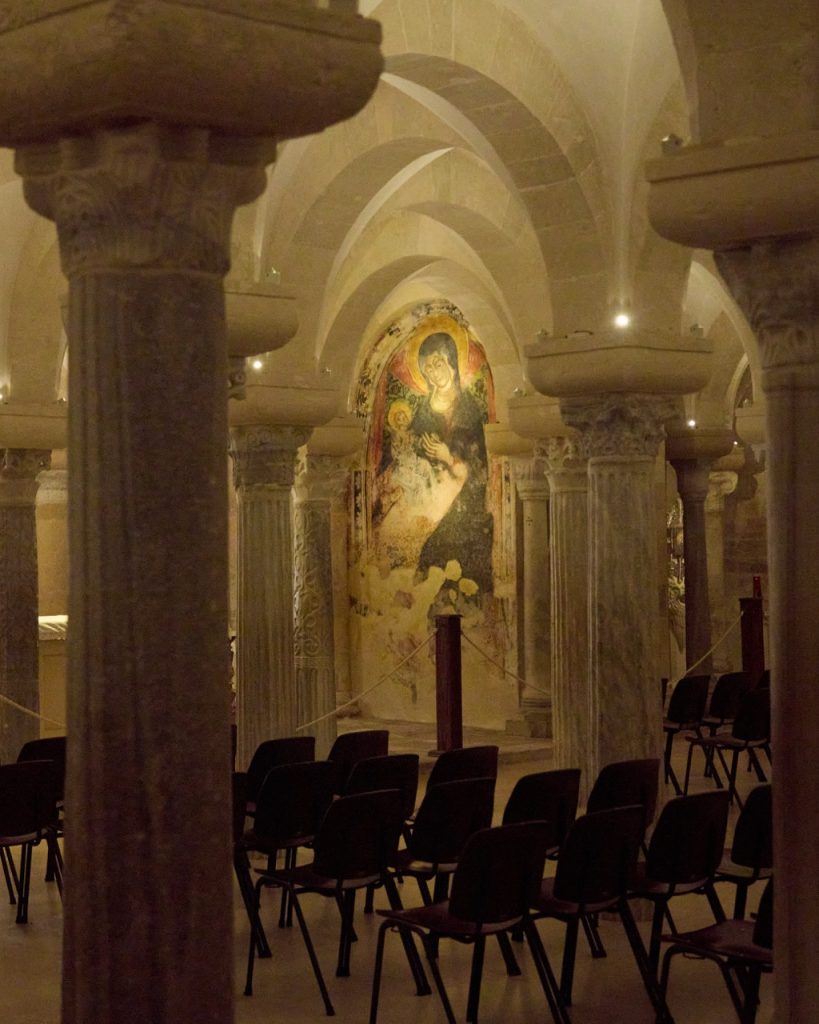
Stop 2: The Cathedral Crypt
Hidden beneath the high altar of the Cathedral lies a place of indescribable atmosphere: the Crypt. Descending the stairs, you will find yourself immersed among 42 columns, each distinct in style, material, and origin (some sourced from ancient Roman temples and Byzantine monuments, others crafted locally). Spend a few minutes in the silence of this sacred space, perfect for collecting your thoughts before moving on.
Stop 3: The Diocesan Museum and Revealed Art
Emerging from the quiet crypt back into the light of the square, enter the Diocesan Museum, located just a few steps away. Having the entire morning at your disposal, this stop is essential to completing Otranto’s historical and artistic narrative.
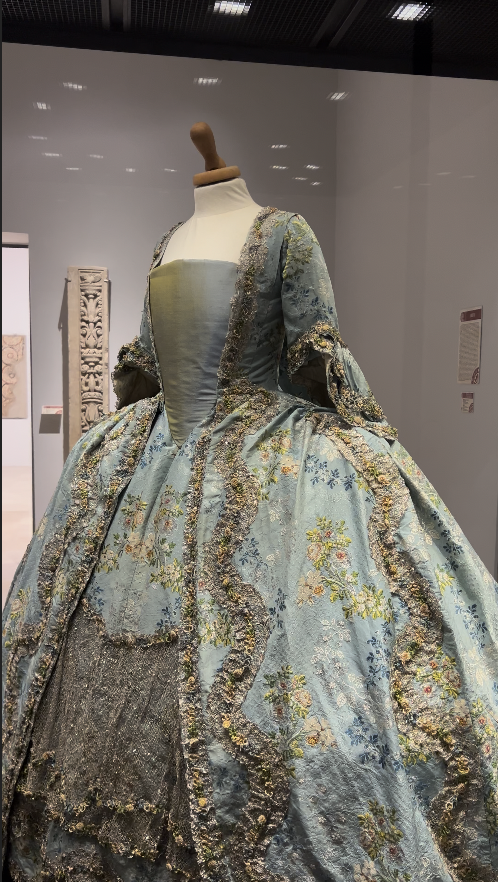
Inside, you can admire up close the surviving fragments of mosaics even older than those visible in the cathedral, finely embroidered sacred vestments, sculptures, valuable paintings, and important archaeological artifacts that bear witness to the close bond between faith, art, and the complex history of this crossroads of worlds.
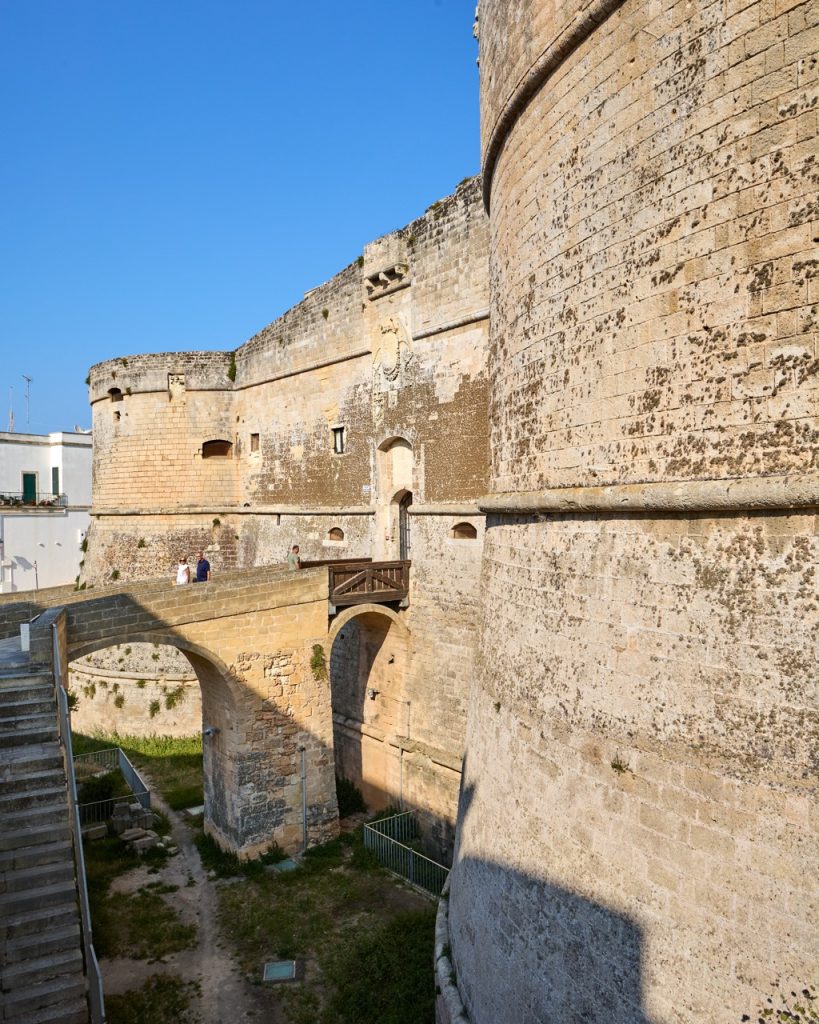
Stop 4: The Aragonese Castle
Following Via Cenobio Basiliano, the impressive mass of the Aragonese Castle reveals itself in all its geometric beauty. Rebuilt at the end of the 15th century on the remains of earlier Byzantine and Norman fortifications, this pentagonal fortress stands as the symbol of Otranto’s resilience.
A thorough visit allows you to stroll through its inner courtyard, explore the exhibition halls (which frequently host international art exhibitions), and climb up to the ramparts. From up here, you can touch firsthand the wounds and pride of a frontier city. The castle—which inspired Horace Walpole’s famous first-ever Gothic novel—will enchant you with its austere charm.
Stop 5: Torre Matta and the Horizon View
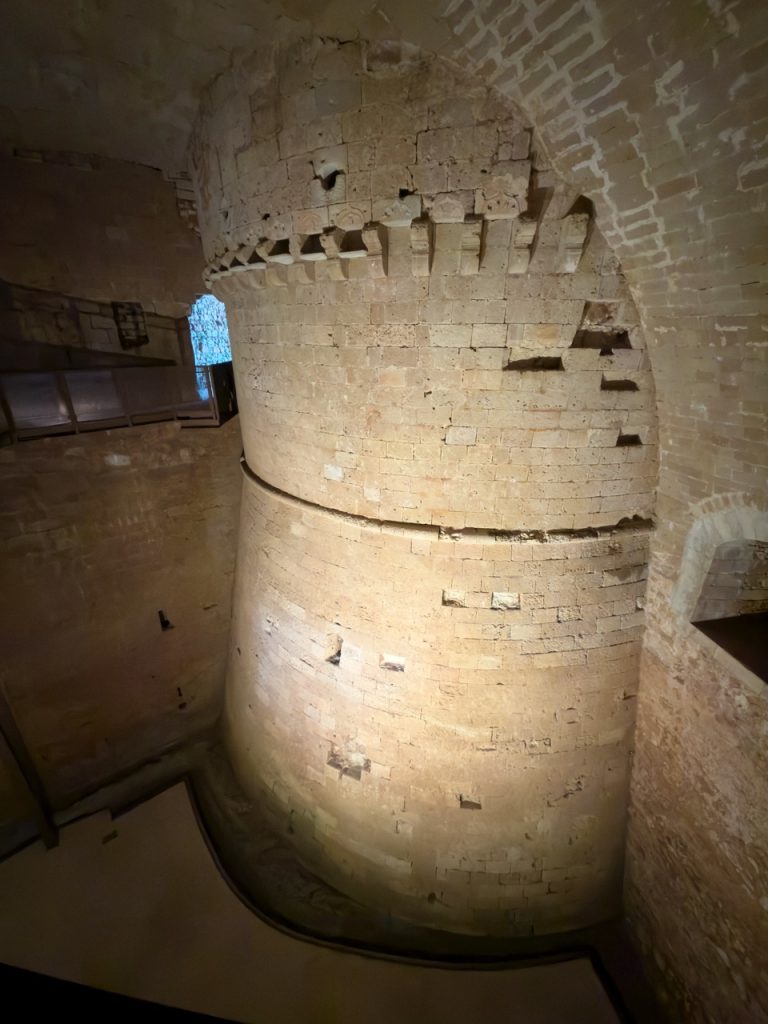
Walking along the inner battlements of the walls, head towards the extraordinary Torre Matta. This impressive defense structure holds a secret of military engineering: a 15th-century cylindrical tower completely enclosed and hidden inside a 16th-century square bastion, uncovered only in recent years through expert restoration and excavation. Looking out from the tower’s terrace, your gaze wanders over the boundless blue sea, offering one of the most spectacular views in the entire town.
Stop 6: The Byzantine Basilica of San Pietro
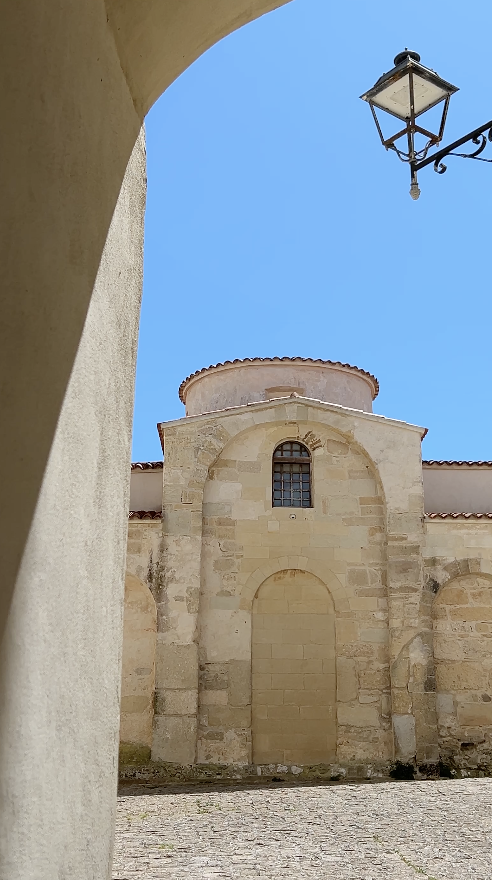
Temporarily leaving the pull of the coast behind, venture back into the narrower, quieter alleys of the historic center. You will reach a cozy little square where the Basilica of San Pietro stands—a sublime testament to the long period of Byzantine rule in Salento. Crossing its threshold, the atmosphere becomes intimate and almost mystical: you will be surrounded by warm-toned frescoes depicting saints and biblical scenes, instantly transporting you back to Byzantium’s golden age.
Stop 7: The Pelasgi Bastions
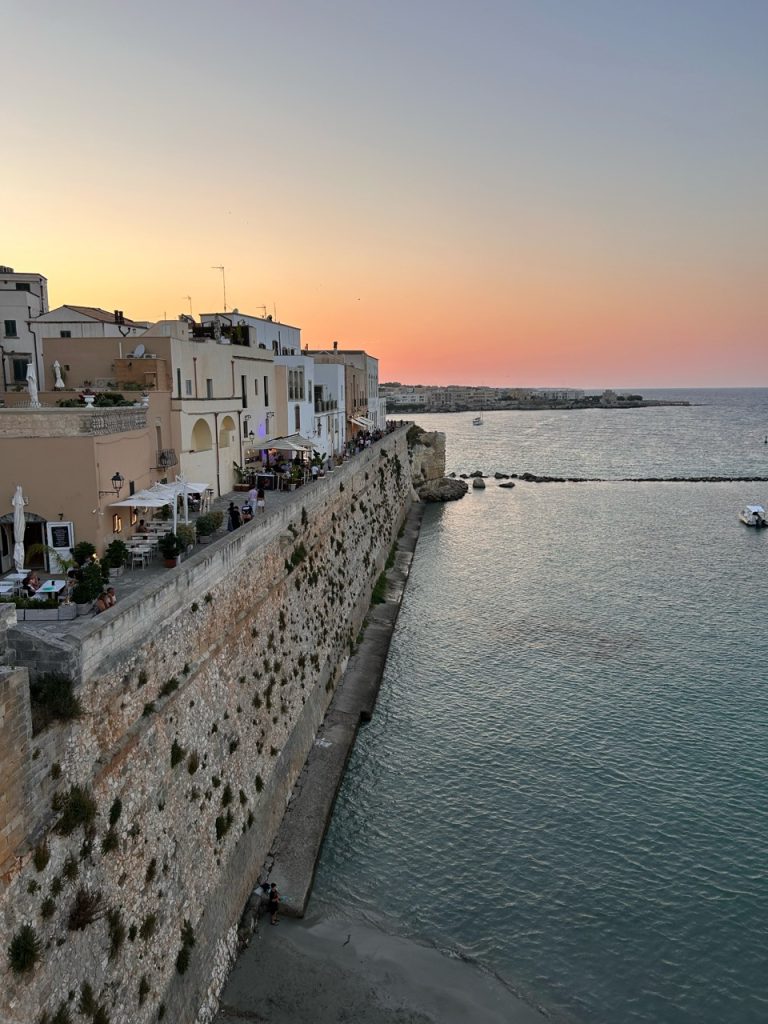
Leaving the spiritual quiet of San Pietro behind, the scent of the sea guides you back toward the outer edge of the town. Following the perimeter walls, you’ll walk along the Pelasgi Bastions, an extraordinary scenic terrace overlooking the port of Otranto.
By mid-morning, the high sun makes the water sparkle in a thousand shades of turquoise. Take some time to breathe deeply of the sea air and listen to the gentle rustle of the waves. On clear days, when the Tramontana wind clears the sky, your gaze can reach beyond the horizon to spot the sharp outlines of the mountains of Albania and the Greek islands.
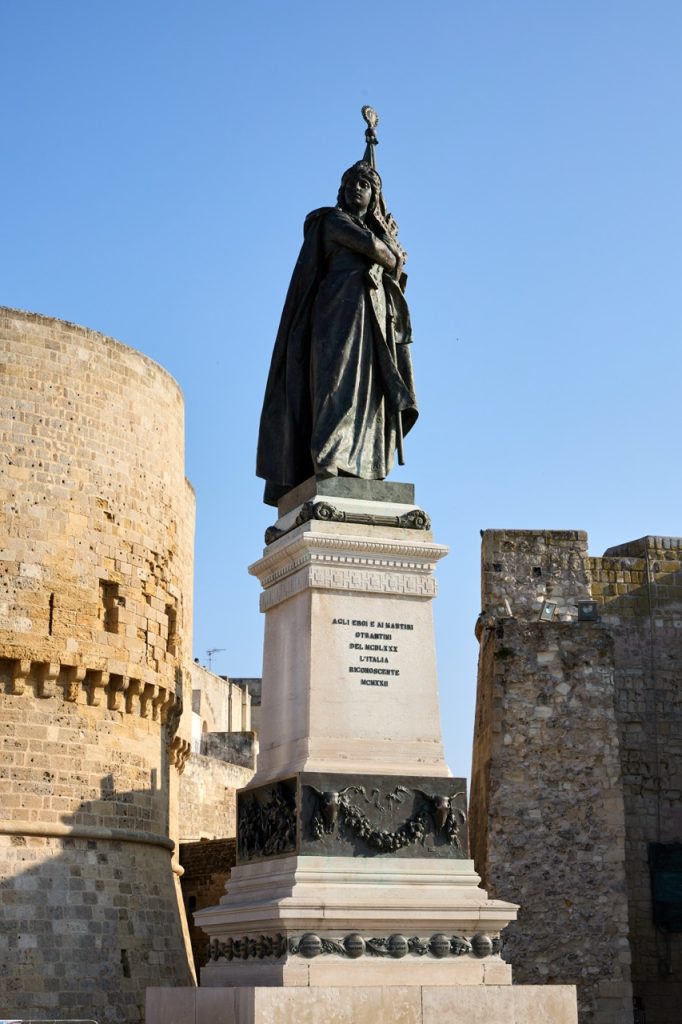
Return to the Starting Point: The Monument to the Heroes
To complete the loop, continue the scenic walk along the historic walls, lulled by the coastline’s silhouette. Before reaching the exit of the old town, you’ll encounter the solemn Monument to the Heroes (dedicated to the Martyrs of Otranto of 1480). This striking bronze work stands proud against the backdrop, a perpetual memorial to the sacrifice and courage of the Otranto people.
From here, just a few short steps bring you back in front of the majestic silhouette of Porta Alfonsina, bringing our journey full circle.
Your rich morning exploring Otranto concludes right where it all began. Now that your eyes and mind are filled with wonders and history, it is time to reward yourself. You can choose to stop at one of the charming little restaurants tucked in the alleys for a lunch made with local ingredients, or sit in the shade to enjoy a refreshing caffè in ghiaccio con latte di mandorla (iced coffee with almond milk), the quintessential taste of a Salento summer.